CS:GO Map Callouts: Train and Nuke
CS:GO's Train and Nuke callouts help players communicate enemy positions clearly instead of just saying "left or right.
2 min read
In brief
AI summaryLearning map callouts in CS:GO improves team communication and increases your chances of winning rounds.
The Train map was introduced in 2009 and joined the competitive map pool in 2014 after years of changes and refinement.
The Nuke map was reworked in 2016 into an American nuclear power plant setting and favors the CT side due to T-side difficulties.
Contents2 sections
Knowing the callout names on a CS:GO map, and being able to relay that information to your teammates, will make a big difference in winning rounds. In this guide we've put together for you, we've worked to make sure you never have to describe an enemy you see on the map as "left or right!" again. Here are the Train callouts and Nuke callouts!
Train Map Callouts
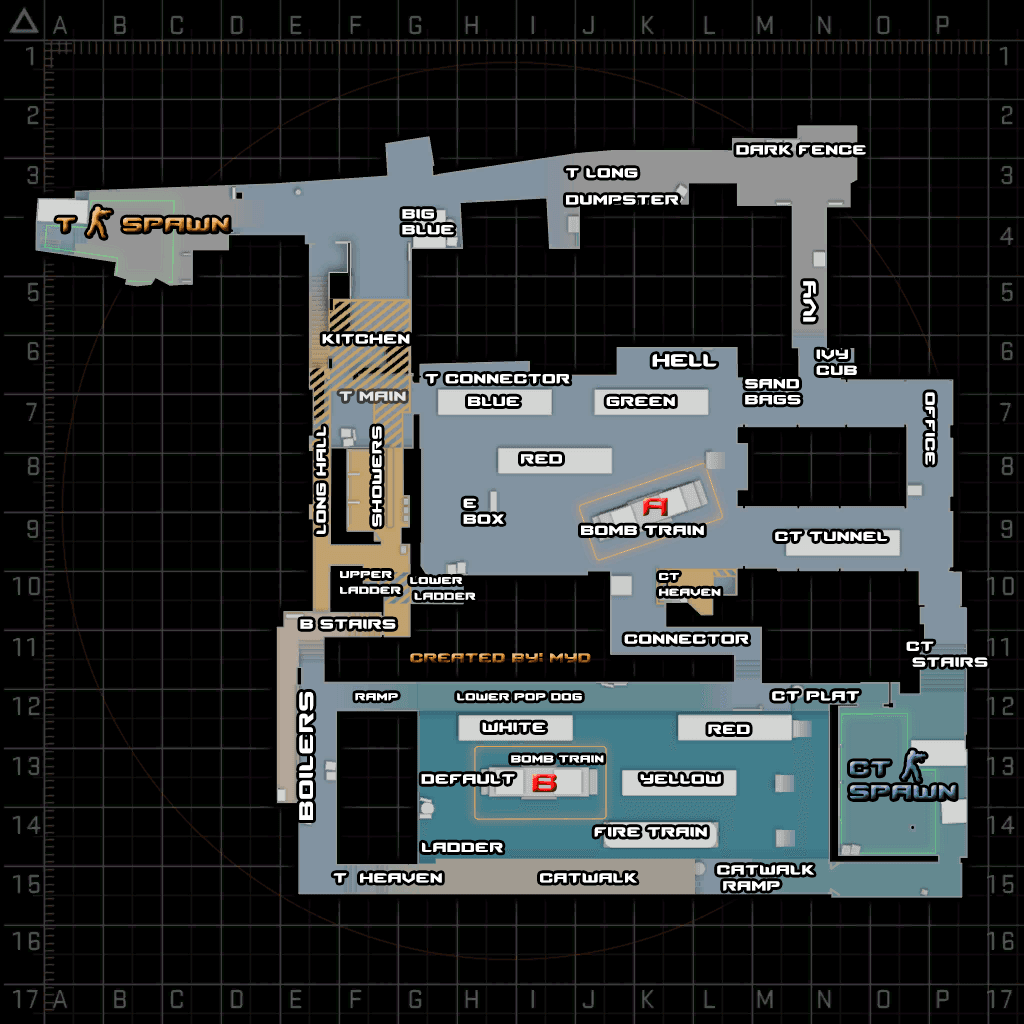
Created by Christopher Mair and set at a train station in Eastern Europe, the "train" map first met players in 2009. After being played for 5 years before joining the competitive map pool, it was added to the competitive rotation in 2014 following changes and improvements. Although the map looks like it heavily favors the CT side, pro teams in esports tournaments have repeatedly proven otherwise. Since it's a map that requires a lot of knowledge, it's also known for not being very popular in casual matches. You can find the detailed callout graphic we prepared for Train below.

Nuke Map Callouts
While Nuke was originally set in a location in Germany, in 2016 CS:GO reworked it into an American nuclear power plant. First developed in 1999 by Jo Bieg, this map favors the CT side and, due to the difficulties for the T side, isn't very popular among players. You can find the Nuke callouts in the graphic below.

You can find Dust 2 callouts, Overpass callouts, and Cache callouts here. And you can find Inferno Map Callouts and Mirage Map Callouts here.