
14 Games for 3-4 Players to Enjoy at Home
Scrabble, Jenga, Taboo, Monopoly and Charades lead this roundup of 14 classic games for 3-4 players at home.
8 min read
In brief
AI summaryFourteen low-tech games for 3-4 players are covered, including Scrabble, Jenga, Taboo, Monopoly and Charades.
Several games, like Musical Chairs and Touch and Guess, can be played with more than 4 people and outside the home.
Word and guessing games like Name-City-Animal and Who Am I? need no equipment beyond paper or nothing at all.
Contents17 sections
Games for 3-4 Players to Enjoy at Home with the Family
Sometimes technology just isn't enough to pass the time at home. That's exactly when it becomes worth revisiting the old days and taking a look at what we used to enjoy before technology took over our lives. We've listed games for 3-4 players to play at home with the family, some of which you may already know and some you may not have noticed. Some of the games on the list can be played with more than 3-4 people too, and you don't even have to play them at home! Once you've gone through the whole list, you'll understand what we mean better ;)
 What Are Some Fun Games to Play at Home?
1) Scrabble
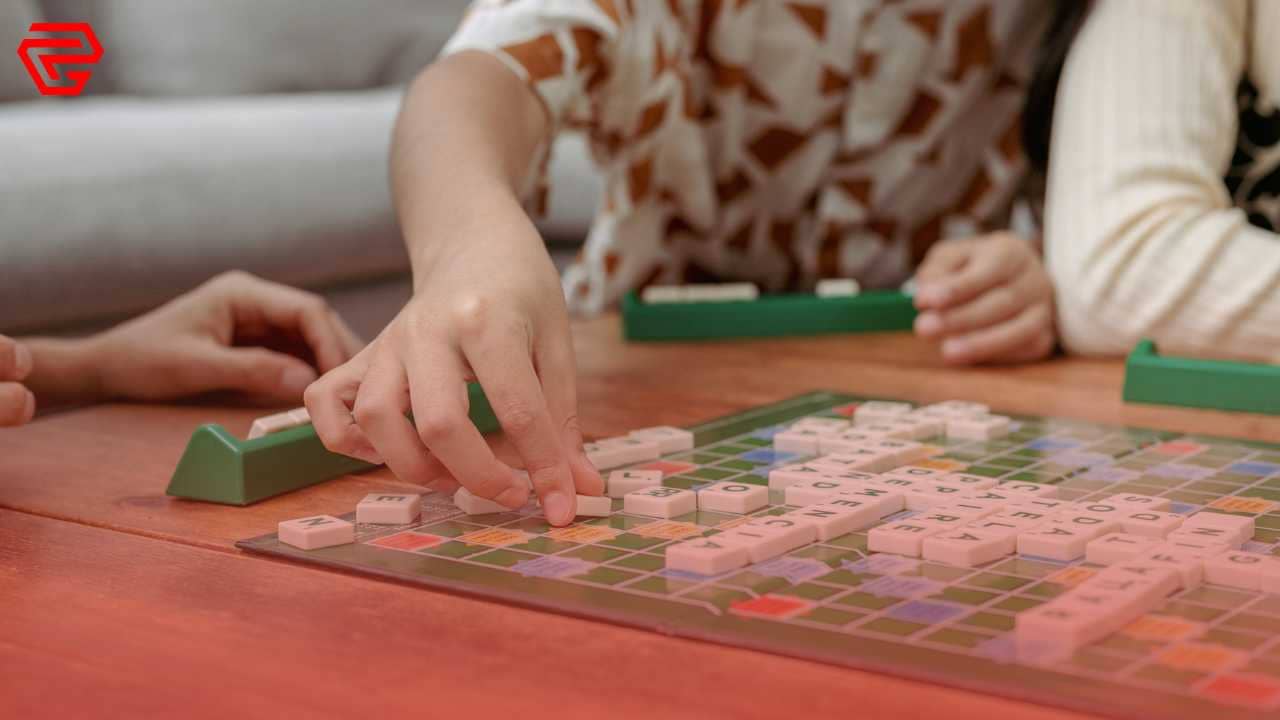
 Scrabble is a turn-based word game for two, three or four players, played by placing meaningful words formed from 7 randomly drawn letters onto a specially designed 15-by-15 board. The first word played at the start of each game must have one letter placed exactly on the center square of the board. Words played after the first must connect to at least one of the previous words, as in a crossword. The word formed by this connection must also be meaningful. Words can be written right-to-left and top-to-bottom. A standard dictionary is generally used in the game.
2) Jenga
 Jenga is a physical skill game developed by British game designer and author Leslie Scott and marketed by Hasbro. Players take turns pulling a single block from a tower made of 54 blocks. Each block pulled is placed on top of the tower, making the tower progressively more unstable.
Rules
It's made up of 54 wooden blocks. A tower of 18 levels is built, with three blocks per level. However, if the first three blocks are arranged north-south, the three blocks above them must be arranged east-west. Players take turns pulling a block from this eighteen-level tower and start stacking it back on top, just as at the start. Players must pull the block they touch using only one hand. Whoever pulls the last block before the tower falls loses the game. If the game is to be played again, the job of gathering the blocks back into a tower falls to whoever lost the previous game.
3) Getting to Know Each Other Game

A game you'll especially enjoy with close friends and family. You prepare questions on slips of paper — like "What's your favorite food?", "What's your favorite song?", "If you were an animal, what would you want to be?" — and then form your answers by guessing what the people you're playing with would say. Everyone writes down their guesses about the others without showing anyone, then reads them out afterward. Let's see how well you know each other!
4) Yes - No
 One of the most popular old TV game shows, Yes-No is a game you can easily play with your circle of friends or family. You have to answer the questions asked by the person across from you without saying yes or no. If you say yes or no, you lose. For example, if asked "Do you live in Istanbul?" you shouldn't answer "Yes," but rather something like "I do," etc.
5) Taboo
 One of the most favorite board games, Taboo, is a game where you split into two teams and try to describe the word you're given without using the forbidden words, earning points as you go and moving up the game board according to your score.,
While the clue-giver is describing words to their teammates, if they use a word from the taboo forbidden words list printed under the word, the other team's player acting as observer blows the taboo whistle and says "taboo." If the clue-giver commits a taboo, they can no longer describe that word.
Under Taboo's rules, a team can give clues for the duration of one hourglass timer. However, when they land on a double-time space on the board, this duration doubles. Taboo's rules don't end there — while describing words to their teammates, the clue-giver can't use body language, can't mumble, and can't say the word in a different language. While playing Taboo, you should avoid moves that would distract the opposing team, and you must say the word being described to your own team even if you understand it. When a team's describing time runs out, they move their piece forward on the board by the number of words correctly guessed during that time.
What Are Some Games to Play with Friends?
6) Touch and Guess
 One of the concepts from shows like Family Feud, Touch and Guess is played by putting materials you've chosen at home into a container while the playing participant is blindfolded. The blindfolded player reaches into the containers and guesses what they're touching, and whoever guesses correctly the most, whether a person or a group, wins.
7) Name - City - Animal or Name - Plant - City
 One of the most popular games before the technology era, in Name-City-Animal, a letter is chosen from the alphabet (usually "Ğ" is not chosen). Names of a name, city, animal, plant, item, country, artist, and other categories agreed upon by the players, all starting with the chosen letter, are written under the relevant category on a sheet of paper divided into columns. Local or informal usages of names are generally not accepted. The first player to complete all the categories starts a 1-minute timer, and the other players must finish within that 1 minute. If 2 people write the same answer they get 5 points, if different they get 10 points, if blank they get 0 points. If the game is played with 3 or more people and everyone writes the same thing except for one person who writes something different, that person gets 15 points. Whoever has the most points at the end of the game wins.
8) Bouncing the Ball into a Cup
 A game that especially develops planning, concentration and hand-eye coordination skills, played like this:
- Two small tables are placed in front of the players.
- A cup is placed on the table farther from the player.
- The player tries to bounce the ping-pong ball in their hand off the empty table in front of them and into the cup on the other table.
- The first player to get the ball into the cup wins the game.
- This game can be played by at least two people competing against each other, or in turns while timing each attempt.
- Whoever completes it in the shortest time wins the game.
9) Who Am I?
 There's a much easier and more fun way to play the Guess Who? board game. Everyone writes down and sticks on the forehead of the person across from them whoever or whatever they want that person to be — this could be a celebrity or an object. The player whose turn it is tries to figure out the person or object written on their own forehead by asking the others questions. Based on answers to questions like "Am I human? Am I a rapper? Am I something solid?" the possibilities narrow down until you figure out who or what you are. Whoever guesses fastest wins the game!
10) Telephone
 Players sit side by side. The person sitting at the start whispers something into their friend's ear. That friend whispers it to the person next to them. This continues until it reaches the end of the line. The goal isn't to keep the sentence from getting distorted — it's to distort the sentence in as creative a way as possible.
What Other Games Are on the List of Family Games to Play at Home?
11) Musical Chairs
 In musical chairs, chairs are arranged back-to-back in a circle. The number of chairs is always one fewer than the number of players. While the music plays, players walk around the chairs in time with the rhythm. When the music stops, they sit in the nearest chair. Whoever is left standing is out of the game, and one chair is removed after each round. Eventually two players remain circling around a single chair. Whoever grabs the chair wins.
12) Charades
 You can easily play this with your family and friends at home or outside. You don't need any materials for this game. All you need are the players.
Before playing, you can research movies and make yourself a list.
How to Play?
First, you need to form two groups of equal size. One of the groups picks a movie title and whispers it into the ear of a player from the other group. That player must act it out for their own teammates. If the teammates guess the movie's name within the given time, that group wins.
The person acting it out can't speak. They have to get their point across using only gestures and expressions — that's why it's called charades. You must also convey the movie's genre and word count using hand and arm gestures.
13) Monopoly
 Monopoly is a dice-based board game about real estate. The word "monopoly" means, in English, exactly that — a monopoly. Players' goal is to buy up as much property as possible (creating a monopoly) in order to drive the other players into bankruptcy.
Players move around the board's squares by rolling dice, completing loops, all while trying to become the most economically powerful player through activities like renting, buying, building and trading.
14) BOM
[caption id="attachment_51392" align="aligncenter" width="1022"] Sivas Disabled Care Home: Playing BOM.[/caption]
You can play this game anywhere, and it's a good choice when you're really bored or want to lift your mood. Depending on the number of players in the game, one number is designated as BOM. That number and its multiples are never said aloud — you say "BOM" instead. Whoever fails to say BOM loses, and whoever remains last wins.
Rules
Say there are 5 of you; to avoid always making the same person say BOM, you shouldn't make 5 the BOM number. Say you chose 6 as BOM. The players count off in sequence, saying 1, 2, 3, 4, 5, and whoever reaches six says BOM, then continues with 7, 8, 9, 10, 11, and at 12 they say BOM again and continue...
Frequently asked questions
Questions answered in this article
What Are Some Fun Games to Play at Home?
Scrabble is a turn-based word game for two, three or four players, played by placing meaningful words formed from 7 randomly drawn letters onto a specially designed 15-by-15 board. The first word played at the start of each game must have one letter placed exactly on the center square of the board. Words played after the first must connect to at least one of the previous words, as in a crossword. The word formed by this connection must also be meaningful. Words can be written right-to-left and top-to-bottom. A standard dictionary is generally used in the game.
Go to sectionWhat Are Some Games to Play with Friends?
One of the concepts from shows like Family Feud, Touch and Guess is played by putting materials you've chosen at home into a container while the playing participant is blindfolded. The blindfolded player reaches into the containers and guesses what they're touching, and whoever guesses correctly the most, whether a person or a group, wins.
Go to section9) Who Am I?
There's a much easier and more fun way to play the Guess Who? board game. Everyone writes down and sticks on the forehead of the person across from them whoever or whatever they want that person to be — this could be a celebrity or an object. The player whose turn it is tries to figure out the person or object written on their own forehead by asking the others questions. Based on answers to questions like "Am I human? Am I a rapper? Am I something solid?" the possibilities narrow down until you figure out who or what you are. Whoever guesses fastest wins the game!
Go to sectionWhat Other Games Are on the List of Family Games to Play at Home?
In musical chairs, chairs are arranged back-to-back in a circle. The number of chairs is always one fewer than the number of players. While the music plays, players walk around the chairs in time with the rhythm. When the music stops, they sit in the nearest chair. Whoever is left standing is out of the game, and one chair is removed after each round. Eventually two players remain circling around a single chair. Whoever grabs the chair wins.
Go to section