

Steam Deck Specs: Screen, Battery, OS and Storage Explained
As of January 2022, the Steam Deck has a 7-inch 1280 x 800 IPS screen at 60Hz, 2 to 8 hours of battery life, SteamOS with dual-boot Windows support, and 64GB eMMC, 256GB or 512GB NVMe SSD storage.

4 min read
In brief
AI summaryIn January 2022, Valve's Steam Deck measures 298 mm x 117 mm x 49 mm and weighs about 669 grams (1.47 pounds).
The Steam Deck has a 7-inch IPS LCD touchscreen at 1280 x 800 and 60Hz, an AMD Zen 2 and RDNA 2 APU, and Valve rates its battery life at two to eight hours.
The Steam Deck ships with Linux-based SteamOS with dual-boot Windows supported; storage options are 64GB eMMC, 256GB NVMe at $529 and 512GB NVMe at $649.
Contents6 sections
Valve has unveiled its new handheld gaming console, the Steam Deck, and although it looks similar to a Switch or a PlayStation Portable, it is bigger than most devices of its kind.

What Are the Steam Deck Specs?
Dimensions
The Steam Deck will measure 298 mm x 117 mm x 49 mm, or 11.7 inches long, 4.6 inches tall and just under 2 inches thick. For comparison, the standard Nintendo Switch is 173 mm x 102 mm x 14 mm, or 9.5 inches long, 4 inches tall and 0.55 inches thick. Meanwhile, the Steam Deck weighs about 669 grams, or 1.47 pounds, a little less than twice the weight of a Switch with Joy-Con controllers attached (0.88 pounds).
Screen, Resolution and Refresh Rate
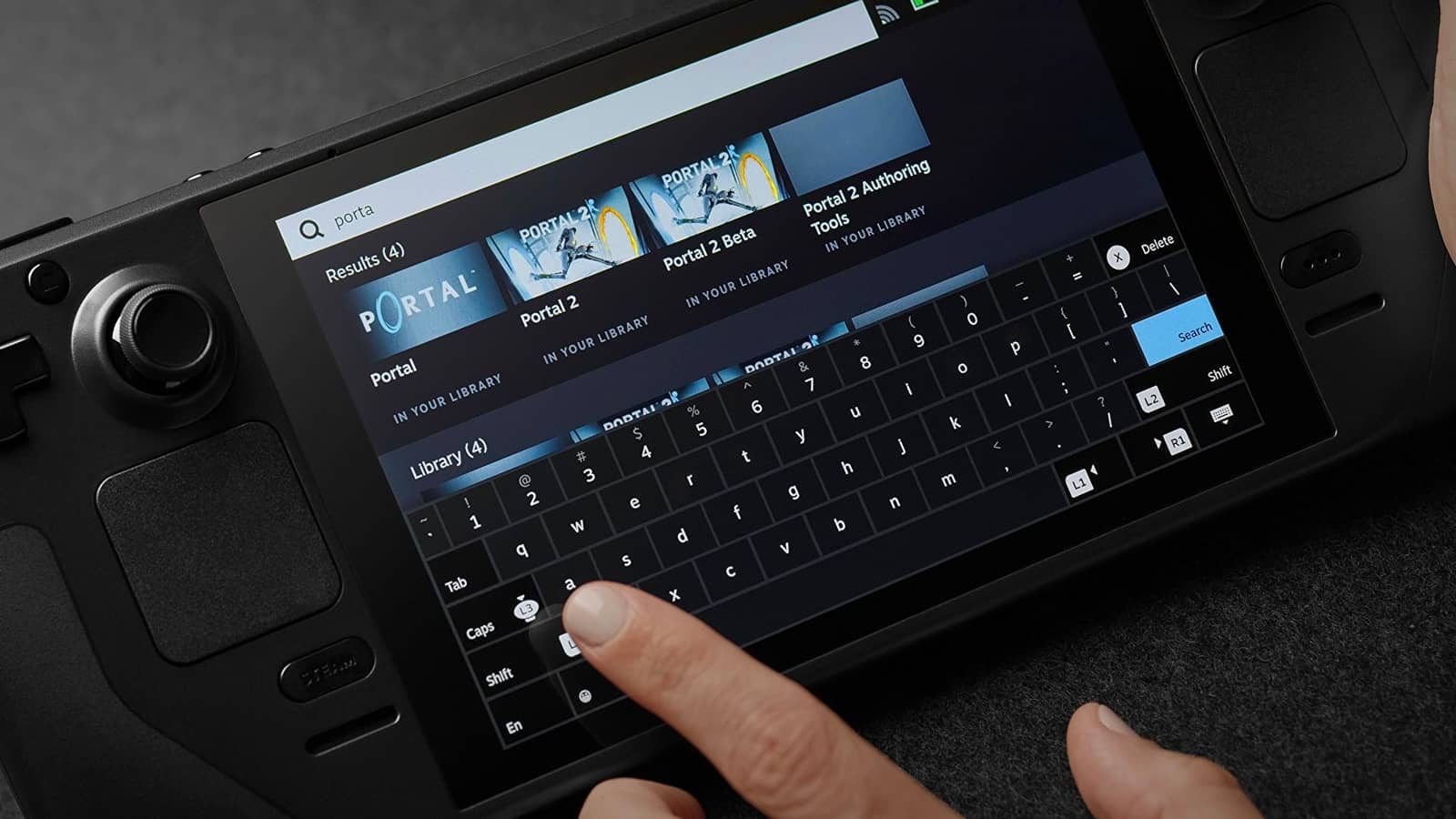
Whichever version of the Switch you look at, the Steam Deck is bigger than a Switch. According to the plans on the official website, Valve appears to have used that space. On either side of the 7-inch IPS LCD screen there are plenty of buttons, two thumbsticks, a D-pad and a trackpad. In addition, the console comes with right and left analog triggers and bumpers, as well as four more mappable buttons on the back (R4, R5, L4, L5). The Steam Deck has a 7-inch touchscreen. It is larger than the original Nintendo Switch and the Switch Lite, but the Switch OLED matches it in size. While the Switch OLED has better color reproduction and contrast thanks to its OLED panel, the Steam Deck relies on an optically bonded IPS LED display. It also runs at a fairly standard 60Hz refresh rate and a native resolution of 1280 × 800, marginally higher than the Nintendo Switch's 1280 × 720.

CPU, Layout, Battery and Steam Dock
Although the Steam Deck will have a Switch-like dock for easy use with TVs, Valve confirmed that the Steam Dock will not be available at launch. The official page says "more information about the Dock is coming soon", including release date and pricing. Like the Nintendo Switch, Valve has put the Steam Deck's battery life at somewhere between two and eight hours depending on use and the game. Anything that pushes the Deck's 4-core/8-thread APU, powered by AMD's Zen 2 design and RDNA 2 graphics architecture, to its limits will drain the battery faster, while less demanding indie games will get you closer to six to eight hours of use. Valve has chosen a fairly standard port layout for the Deck. On the top left and right of the console body are the shoulder and bumper buttons - very much like the Switch - and there is a 3.5 mm headphone jack, volume buttons and a power button. Valve also placed the USB-C charging port on the top, making the Deck easier to use while charging.
Operating System
Although the Steam Deck will officially ship with Linux-based SteamOS, dual-boot Windows is officially supported. Valve also confirmed that they are working with Microsoft to support the Deck for Windows 11. Greg Coomer, one of the Steam Deck's designers, said in an interview with PC Gamer, “We have nothing yet to suggest there will be any problems with Windows 11.” With support for external displays and traditional mouse and keyboard devices, this means you can turn the Deck into a portable desktop-style computer; however, the performance of games on the Deck under Windows is expected to be affected by the extra overhead Windows adds.

Storage
Although the Steam Deck comes with different storage options, it is worth noting the big performance gap between the base model and everything else. The entry-level Deck comes with 64GB of eMMC storage, which is significantly slower than the 256GB and 512GB NVMe SSD-backed offerings retailing at $529 and $649 respectively. However, users have the option to upgrade storage further. The Steam Deck comes with a microSD slot that supports expandable storage. It is still worth noting that microSD cards are typically much slower than SSDs, so if you want a microSD card with comparable speeds, expect to pay $150 or more. That said, if you are happy playing older games or mostly indie games where load times are not a significant factor, a slower SD card will do the job.
Frequently asked questions
Questions answered in this article
What Are the Steam Deck Specs?
The Steam Deck will measure 298 mm x 117 mm x 49 mm, or 11.7 inches long, 4.6 inches tall and just under 2 inches thick. For comparison, the standard Nintendo Switch is 173 mm x 102 mm x 14 mm, or 9.5 inches long, 4 inches tall and 0.55 inches thick. Meanwhile, the Steam Deck weighs about 669 grams, or 1.47 pounds, a little less than twice the weight of a Switch with Joy-Con controllers attached (0.88 pounds).
Go to section