

FM 25 Player Roles Detailed Guide
FM 25's tactics system covers more than 40 player roles, from the Sweeper Keeper and Libero to the Mezzala, Regista and False Nine.
- FM 25 features more than 40 player roles across goalkeeper, defense, midfield, wide and forward positions.
- Central defensive roles include the Wide Centre-Back, Central Defender, Libero and No-Nonsense Centre-Back, each suited to different tactical setups.
- Attacking roles range from the Mezzala and Regista in midfield to the Poacher, Complete Forward and False Nine up front.
FM 25 Player Roles Detailed Guide! Centre-Back, Winger, Midfield!
As FM 24 slowly winds down, we're now excitedly waiting for FM 25. For newcomers to the game or players switching over from games like EA FC, topics like FM player roles and the interface can sometimes feel complicated. That's why we have put together a detailed guide to FM 25 player roles for you.
What will the FM 25 New Features be? You can check out the latest features of the new game :)
 What Are the FM 25 Player Roles?
As FM 25 player roles, let's start going through the more than 40 roles, if you're up for it.
Goalkeeper
The Goalkeeper role refers to the traditional goalkeeper. These goalkeepers generally stay on their line and don't take part in build-up play. Their main and ultimate goal is to stop the ball from crossing the line.
Sweeper Keeper
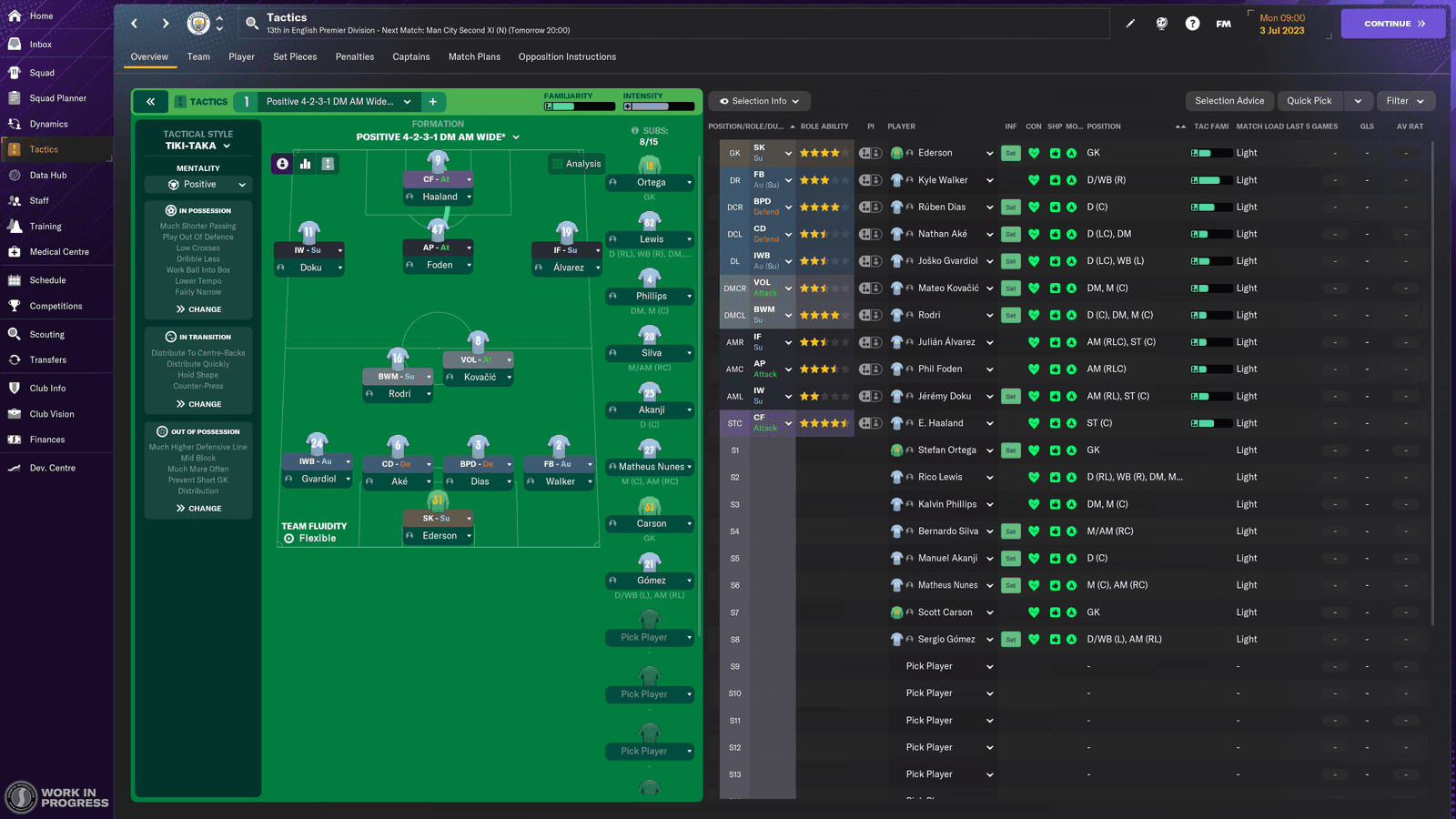
Unlike traditional goalkeepers, Sweeper Keepers actively use the penalty area. Many coaches even count them as an extra outfield player in their setup. This is because Sweeper Keepers play an active role in build-up play. The Sweeper Keeper concept entered our lives with modern football. Examples of these goalkeepers include names like Ederson and Neuer.
 FM 25 Player Roles: Centre-Back Roles

Wide Centre-Back
Wide Centre-Backs are centre-backs who can play on the right or left of a back three. These defenders need to be comfortable on the ball. That's because they help with build-up play and sometimes push up as far as midfield to support attacks. Wide Centre-Backs also generally defend the half-space and mark the opposition's midfielder making runs into the penalty area. On top of that, since these players can sometimes be matched up against the opponent's quick wingers, pace is often preferred for this role. Pavard and Bastoni are good examples of players suited to this role.
Central Defender
Central Defenders are generally picked from players who are defensively strong but technically limited. These players are expected to win aerial duels and clear balls coming in along the ground. This role is generally chosen when there's another defender, like a Wide Centre-Back, playing ahead of them, since they need to act as the last line of defensive cover.
Libero
Libero is the position known in football as the number 5 role. These players need to be good at build-up play. That's one of the traits that sets it apart from the other centre-back roles.
No-Nonsense Centre-Back
The No-Nonsense Centre-Back's job is generally to clear the ball out of dangerous areas. These players are generally not technical and, in build-up play, prefer simple passing options, moving the ball on to a teammate who is better on the ball.
FM 25 Player Roles: Full-Back and Wing-Back Roles

Full-Back
A Full-Back generally plays on the right or left side of a back four and is responsible for defending the wide areas. They're also expected to contribute to attacks from time to time.
Wing-Back
Wing-Backs prioritize attacking over defending. Their priority is to contribute goals or assists to the team going forward. In many cases, they're also the only player who covers the full length of the flank. That's why they're expected to be strong in terms of dynamism and pace. In real life, Wing-Backs, who are usually used in a back five, can also be used in a back four in FM. That's because, in real life, teams sometimes line up with a back four and use one of their full-backs as a wing-back while using the other as a third centre-back. For example, Galatasaray used Köhn as a wing-back while positioning Kaan Ayhan as a centre-back. Similarly, when the Italian national team at EURO 2020 won it, they used Spinazzola in a more attacking role while holding their other full-back back. Examples of Wing-Backs include players like Frimpong, Perisic and Dumfries.
No-Nonsense Full-Back
The No-Nonsense Full-Back has to focus on their defensive side rather than contributing to attack. We sometimes see No-Nonsense Full-Backs in teams that play on the counter-attack and in teams that defend rigidly.
Complete Wing-Back
As the name suggests, Complete Wing-Backs have to play both sides of the game well. Expected to contribute both defensively and offensively, these players need to be strong in terms of dynamism and pace. Given how hard it is to find a genuinely complete wing-back in today's football, these players are worth their weight in gold.
Inverted Wing-Back
As we mentioned earlier, the Inverted Wing-Back is the role used by teams that play with an attacking wing-back in a back four. Examples include Manchester City using Gvardiol this way, Galatasaray using Kaaan Ayhan this way, and Italy doing the same at Euro 2020. These players generally take on the role of an extra centre-back.
Inverted Full-Back
One of the most talked-about roles on the FM 25 Player Roles list, the Inverted Full-Back role entered our lives with Bielsa, even though it gained more fame thanks to Pep Guardiola. These players tend to drift into midfield spaces rather than staying out on the touchline and hold an important place in build-up play. The players Pep Guardiola used in this role included the likes of Cancelo and Zinchenko. Nowadays, Alonso sometimes uses Grimaldo in this role.
Midfielder Roles

Defensive Midfielder
Defensive Midfielders are responsible for carrying their team's defensive workload in midfield. These players can also be used in a man-marking role.
Deep-Lying Playmaker
Unlike Defensive Midfielders, Deep-Lying Playmakers are midfielders who help out with build-up play. These players drop into the space in front of the defense, find gaps and take charge of building play. They're essentially the players who start attacks, since it's their responsibility to get the ball out of their own half safely. They're also relied on more heavily for their playmaking ability when the opposing team is pressing.
Anchor Man
Usually described in Turkish as a "çapa" (anchor), this role is focused mainly on defense. Anchor Men are less technical than Deep-Lying Playmakers but stronger defensively. They're also not expected to have as much dynamism as a Deep-Lying Playmaker.
Half-Back
While the Anchor Man drops into the middle of the defense to form a back three, the Half-Back instead drops into the half-space (the area between the centre-back and full-back) from time to time to create a numerical overload in defense. That's what sets it apart from the Anchor Man.
Regista
Registas generally take on a similar role to Deep-Lying Playmakers, but Registas are given more freedom and flair in their passing. They generally attempt riskier passes, including long diagonal balls. Deep-Lying Playmakers, on the other hand, need to retain possession more for the sake of attacking continuity, so they tend to prefer safer passing options over risky ones. The best-known example of a Regista is Andrea Pirlo.
Roaming Playmaker
Roaming Playmakers are versatile, dynamic midfielders who move around the pitch to influence the game in various areas. Their main goal is to contribute to the team's attacking play through playmaking, creating chances and even scoring goals. They have the freedom to roam both horizontally and vertically across the pitch, which makes them hard for opponents to mark and track.
Segundo Volante
These players are generally used in teams that play with a double pivot (two defensive midfielders). Since they sometimes push into the CM and AMC areas, this defines them as a free-roaming defensive midfielder. In-game, they're known as VOL.
Central Midfielder
Generally what we call the number 8, these are the heart-of-the-team type of players. Central Midfielders are known for their vision, technical ability, defensive awareness and attacking contributions. In Türkiye, Selçuk İnan made a name for himself in this role for many years.
Box-to-Box Midfielder
Box-to-Box Midfielders generally need to be present in both the defensive and offensive phases of the game. The term "box-to-box" describes taking part in the action both in their own box and in the opponent's box, which is what earns these players the box-to-box label. They're among the most dynamic players on a team. Examples include players like Goretzka and Lampard. The Box-to-Box Midfielder could well be one of the most popular roles in our FM 25 Player Roles Guide.
Advanced Playmaker
Advanced Playmakers are generally players who contribute to build-up play in the final third of the pitch. These players are expected to bring creativity in the attacking zone. Often seen in midfield threes, they tend to drift wide and form triangles.
Mezzala
Meaning "half-wing" in Italian, these players generally take attacking actions in the half-space. They generally carry the ball through midfield with their dribbling. One of the best examples of a Mezzala is the way Bernardo Silva has been used at City.
Carrilero
The Carrilero role is filled by a team's hardest-working, engine-room type of player. These players are expected to have top-level tackling, work rate and stamina. They're also the players who raise the tempo of the game.
Ball-Winning Midfielder
The main job of these players is to win the ball back. In-game, they need high tackling and aggression, among other attributes. These players are also generally used in teams that play gegenpressing. This way, they give their team a fast transition into attack. High technical ability isn't usually expected from these players.
FM 25 Wide Player Roles
Wide Midfielder
These are wide players generally used in formations like 4-4-2. Their most important trait is their work rate, both attacking and defending. They're tasked with tracking the opposing full-back. Examples of these players include names like Filip Kostic and Rashica.
Winger
Wingers are generally players who hug the touchline on their flank and look to get to the byline and cross. Because of this, if the player is on the right wing, a right-footed player is preferred. Coman and Barış Alper Yılmaz are good examples of these players.
Defensive Winger
Defensive Wingers generally press the opposition's wide players and are responsible for winning the ball back. Not much creativity is expected from them going forward. Long diagonal passes or crosses are enough. Examples include names like Marc Albrighton and Dirk Kuyt.
Wide Playmaker
These players are generally expected to be creative. Thanks to the creativity they show out wide, they carry the team's assist load. They don't have much responsibility defensively. They're given an important role in supplying the striker. The best examples of this role are players like Ziyech and Tadic.
Inverted Winger
Inverted Wingers are generally players who cut inside with the ball. For this role, a player used on the left wing should be right-footed. These players generally cut inside with the ball and create attacking actions by exchanging passes with the striker and midfielders. The other option is for them to create danger by cutting inside for shots from distance or with dribbling. Grealish is an example of this type of player. We think the Inverted Winger will be one of the most-used roles on our FM 25 Player Roles list.
Inside Forward
These players generally get into the box with the ball as often as a striker would. Highly attack-minded, these players carry a significant share of the team's goalscoring load. The best examples of these are players like Salah and Son.
Wide Target Man
Wide Target Men are generally the wide version of the Target Man. These players use their physicality to overpower the opposing full-back and play a key role in helping their team retain possession by holding the ball up out wide. They're also expected to find goals by outmuscling the opposing full-back on crosses coming from the opposite flank. Larin, who previously played for Beşiktaş in Türkiye, shone playing this role before moving on to a transfer abroad.
Raumdeuter
Raumdeuters are players who look for space in the final third and try to exploit those gaps to score goals. Known in English as the "Space Investigator," the most notable example of this role is Thomas Muller. Even though it isn't a widely used role today, these players need high anticipation and off-the-ball movement attributes. The Raumdeuter may again be one of the most talked-about yet least-used roles in the FM 25 Player Roles guide.
Forward Roles

Attacking Midfielder
Attacking Midfielders are generally the most attack-minded players in the midfield zone. They're expected to be good in areas like creativity, passing and technique. This lets them contribute to the team's goalscoring load.
Trequartista
Not a role with much of a place in modern football, but one we used to see plenty of in the past. These players stood out with their special abilities. This made them one of the most free-roaming players on the team. Thanks to that freedom, they had no defensive responsibilities. When the number 10 got the ball at their feet, the dribbles and shots from distance they produced created danger and made them one of the team's most important goal threats. The most important examples of these players were Maradona and Hagi.
Enganche
Behaving in a similar way to the number 10, the Enganche acts as a hook between midfield and the striker. They're expected to be top-level and make a difference in areas like passing, technique and vision. We could say the Enganche is one of the least-picked roles among the FM 25 Player Roles.
Shadow Striker
Besides linking up well with their strike partner, Shadow Strikers are players who carry a goalscoring load. In attack, they make themselves forgotten and look for gaps to find scoring chances. The best examples are players like Bergkamp and Talisca.
Deep-Lying Forward
Deep-Lying Forwards generally drop a bit deeper to receive passes from midfielders and link up with the other striker. Their partner is usually a Target Man. One of the best examples is Inter's Lautaro Martinez.
Target Man
Target Men generally win the ball both in the air and on the ground and work hard to keep possession for their team. They also create a goal threat in the air from crosses coming in from the flank. On top of that, because of their high physical attributes, they generally give opposing centre-backs a tough time. Players like Giroud and Dzeko are examples of this type of player.
Poacher
Poachers are generally instinctive goalscorers. For them, scoring goals is like an art form. These players generally have very high finishing and convert a high percentage of the chances that fall to them. Some have even nicknamed them the Fox in the Box. The best examples of these players are Vardy, Suarez, Mauro Icardi and Burak Yılmaz.
Complete Forward
This is a striker role that combines all the forward roles listed above. These players are goalscorers, have high passing ability, and have the physical attributes of a Target Man. The best example is Harry Kane.
Pressing Forward
These players are generally used to start the attacking press in teams built around a gegenpressing philosophy. Aiming to win the ball back by pressing the opposing defense, these forwards are expected to have a higher work rate than finishing ability. Examples of these players include Werner, Sesko and, from Türkiye, Umut Bulut.
False Nine
The False Nine's main goal is to drag opposing defenders out of position and create space for their teammates. This role, used by Real Madrid at times in the 2023-2024 season and by Pep Guardiola when he deployed Messi in it, is generally associated with a 4-6-0 formation. We have also seen Arda Güler play as a false nine at times for the Turkish national team.
We have also answered the question of when FM 25 will be released!
For the latest news, follow Gamer Papers and our social media accounts. 🙂
Sources
External links cited in this article
Comments (0)
Log in to leave a comment giriş yap.
No comments yet. Be the first!
Related Posts
All Football Manager →
FM 25 Roland Sallai: Galatasaray Player Analysis
In FM 25, Roland Sallai's best position is right wing in the Winger (Attack) role, where he can help Galatasaray offset Kerem Aktürkoğlu's departure with pace and goal threat.
FM 25 Delayed: What Features Were Removed?
Football Manager 25 was delayed over its move to the Unity engine, adding women's football for the first time while dropping international management and player weights.
FM 25 Wonderkids: Best Young Talents to Sign
A scouting list of FM 25's top wonderkids across positions, from Yan Couto and Warren Zaïre-Emery to Rasmus Højlund and Jorrel Hato.