
OSM Tactic Against Stronger Opponents 2027 (26/27)
What to play against a stronger side in OSM 26/27: a 4-3-3 table for small gaps, back-five Counter-attack setups for big gaps, and the reasoning behind both.

7 min read

Contents11 sections
There are two approaches to an OSM tactic against stronger opponents in 26/27. If the gap is small, stay on the front foot with a 4-3-3 and Wing play while lowering pressing and style; if the gap is big, sit deep with a back five and Counter-attack.
We have not tested the values in this guide. The first approach is compiled from OSM Next Level's counter tactic tables (23 October 2026), a community tool; the second from site tactics OSM Helper has flagged for stronger opponents.
OSM tactic against stronger opponents: what should you change?
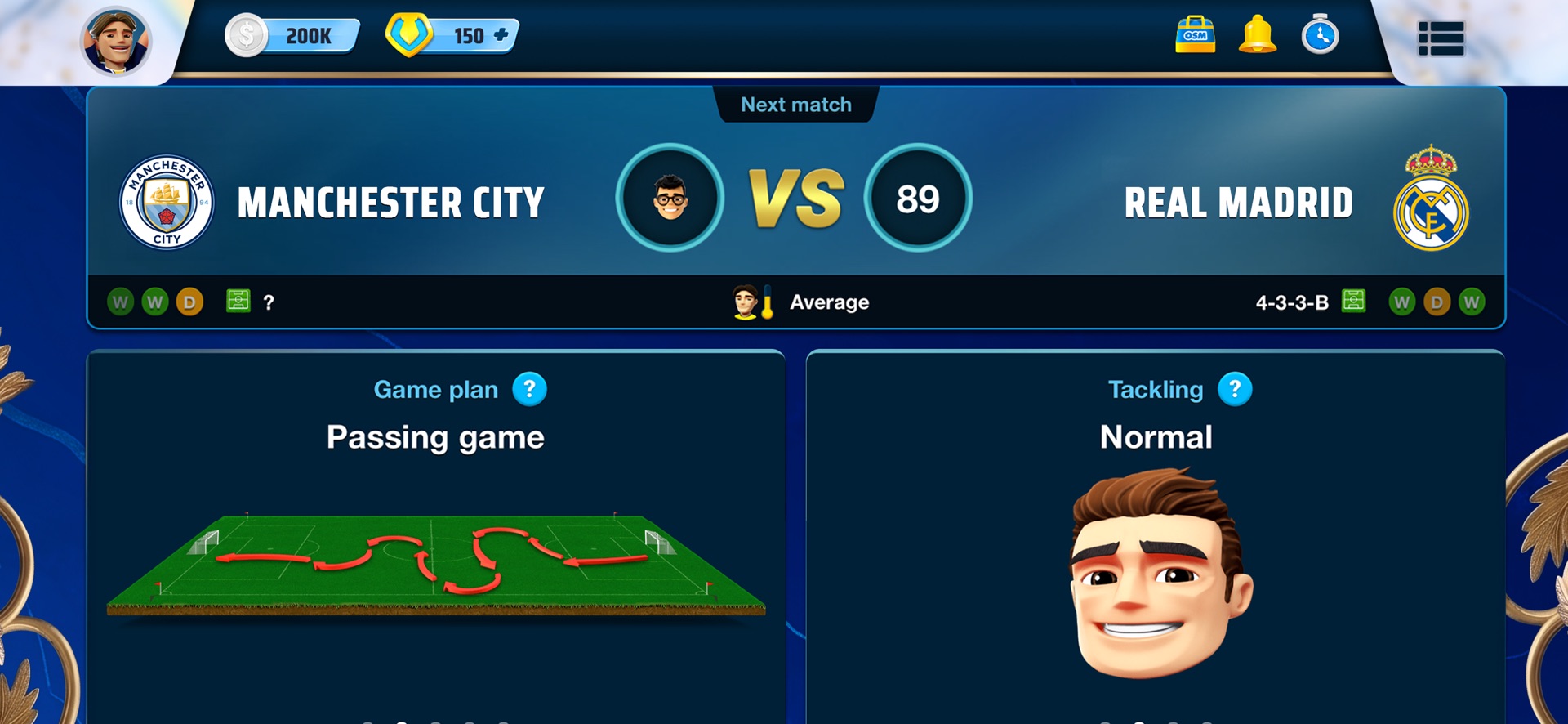
OSM Next Level's setting guides show clearly what its engine does when you are weaker. The averages for a weaker side are Pressing 59, Style 63 and Tempo 60. When stronger, they are 66, 72 and 65.
- Lower your pressing: According to the source, the weaker side presses less so it does not get opened up behind midfield. High pressing also tires players.
- Lower style, but do not bottom it out: Going all-out attacking as the weaker side is a mistake, because a stronger team punishes open space. The engine lowers style with the strength gap but caps the change.
- Avoid a high tempo: Losing the ball quickly against better players feeds their counters. The exception is when the opponent shuts up shop with five or six defenders.
- Venue matters little: In the same data, home and away differ by just one point of pressing. The strength gap decides.
Approach 1: stay on the front foot when the gap is small
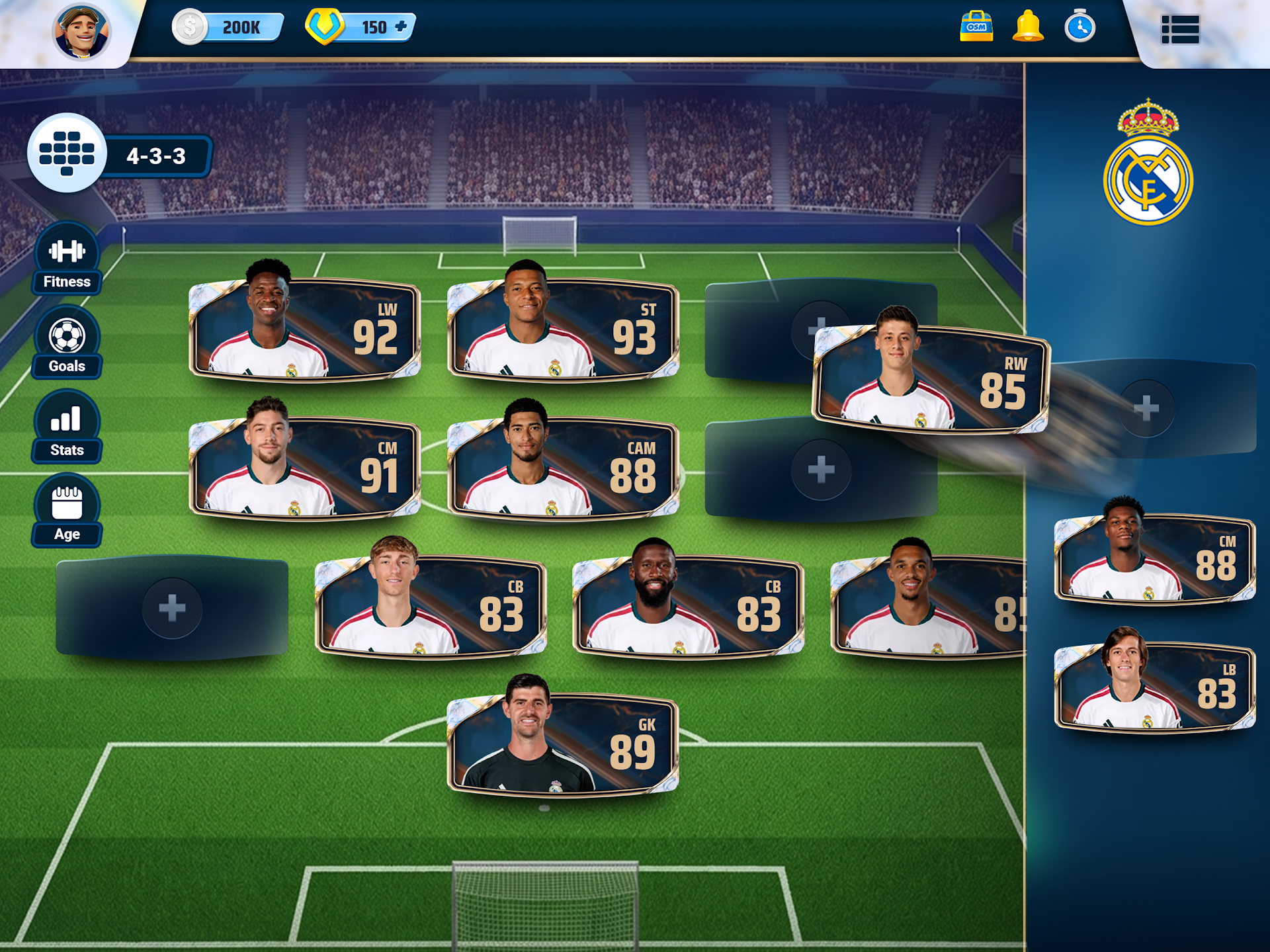
OSM Next Level does not retreat even in the scenarios where you are weaker; it answers every opponent with a 4-3-3 and nearly always Wing play (WP). Values are listed as Pressing/Style/Tempo:
| Opponent formation | Home (you are weaker) | Away (you are weaker) |
|---|---|---|
| 4-3-3A/B | 4-3-3B, WP, 48/62/65 | 4-3-3B, WP, 65/63/48 |
| 4-4-2A/B | 4-3-3A, WP, 60/60/65 | 4-3-3B, WP, 56/61/52 |
| 4-2-3-1 | 4-3-3A, WP, 73/62/47 | 4-3-3B, WP, 60/60/51 |
| 4-5-1 | 4-3-3B, WP, 60/60/52 | 4-3-3B, WP, 60/60/51 |
| 5-2-3A/B | 4-3-3B, WP, 56/66/61 | 4-3-3A, WP, 60/65/75 |
| 5-3-2 | 4-3-3B, WP, 60/65/65 | 4-3-3B, WP, 60/65/60 |
| 5-3-1-1 | 4-3-3A, WP, 59/62/66 | 4-3-3B, WP, 59/63/63 |
| 5-4-1A/B | 4-3-3A, WP, 69/69/60 | 4-3-3A, WP, 51/51/59 |
| 6-3-1A/B | 4-3-3A, WP, 55/65/60 | 4-3-3A, WP, 55/75/75 |
The reasoning varies by opponent. Against shoot-on-sight shapes like 4-2-3-1 and 4-5-1, keeping the ball away from them cuts off their long-range shots at the source. Against sides that shut up shop, such as 5-4-1 and 6-3-1, waiting makes no sense; as the source puts it, they never open up, so there is never space to counter into.
Line tactics are fixed across this table: Forwards on Attack only, Defenders on Defend deep and Midfielders mostly on Protect the defence. Marking is zonal, and the offside trap stays off.
Approach 2: sit deep and counter when the gap is big
If the squad gap is large and you just want a point, defensive setups may make more sense. These OSM Helper site tactics are flagged for use against stronger opponents:
| Formation | Game plan | Line tactics (F / M / D) | Pressing/Style/Tempo | Flagged for |
|---|---|---|---|---|
| 5-2-3A | Counter-attack | Attack only / Protect the defence / Defend deep | 70/30/70 | Home vs stronger; away vs even and stronger |
| 5-3-2 | Counter-attack | Attack only / Protect the defence / Defend deep | 30/25/60 | Home and away vs stronger |
| 5-3-1-1 | Counter-attack | Attack only / Protect the defence / Defend deep | 10/15/80 | Home and away vs stronger |
| 6-3-1A | Counter-attack | Attack only / Stay in position / Defend deep | 80/45/50 | Away vs even and stronger |
| 5-4-1B | Shoot on sight | Support midfield / Protect the defence / Defend deep | 39/29/59 | All situations |
The common logic: five or six defenders give you spare men against their forwards, a low style keeps the team behind the ball, and a high tempo moves the ball forward quickly once you win it. With a back five, zonal marking works comfortably against most opponents, since they rarely field five forwards.
There is a risk. With a low style, the opponent keeps the ball for long spells. If they play Shoot on sight, a crowded box can hand them shooting chances from distance. That is why OSM Next Level prefers taking the ball off 4-2-3-1 and 4-5-1 instead of retreating.
Which approach, and when?
- A gap of a few rating points: Approach 1. Stay on the front foot, trim pressing and style for the gap.
- A big gap against Wing play or Passing game: The back-five Counter-attack setups in Approach 2.
- The opponent shoots on sight: Try to keep the ball instead of retreating; according to the source, their danger comes from shots outside the box.
- The opponent parks the bus (5-4-1, 6-3-1): Waiting is pointless; use width and tempo.
What else closes the gap besides tactics
According to OSM Helper's 26/27 guide, a few match-preparation tools help:
- Training camp: Your team performs 25% better in the next match; usable up to six times per league, with the Boss Coin cost rising each time.
- Secret training: Stops opponents spying on you and adds 2.5% performance. Used before a training camp, it keeps the camp notification from reaching your opponent.
- Stadium pitch: Adds 2%, 4% or 6% performance in home matches, depending on its level.
- Nation bonus: Requires at least six players of the same nationality in your starting eleven.
These percentages come from OSM Helper's guide; we could not confirm them against an official statement.
What changed since our older guide
Our earlier guide to playing stronger opponents centred on 6-3-1. The 26/27 community data is split: one side recommends staying on the front foot with a 4-3-3 even when weaker, the other recommends a back-five counter. The tactics screen itself has not changed. OSM's official help page also says there is no single best tactic and recommends testing in friendlies.
Frequently Asked Questions
What is the best formation against a stronger opponent in OSM?
There is no single answer. For a small gap, community data suggests 4-3-3 with Wing play; for a big gap, 5-2-3A, 5-3-2 or 5-3-1-1 with Counter-attack stand out.
Should pressing be high against a stronger team?
Usually not. In OSM Next Level's data, average pressing is 59 when weaker and 66 when stronger. High pressing leaves space behind your midfield.
What should I watch out for away to a stronger side?
In the community data, venue matters little and the strength gap decides. Lower the tempo to cut turnovers and keep the offside trap off.
Does the training camp really give a 25% boost?
OSM Helper's guide says so. We could not find that figure in an official source, so treat it as community information.
Frequently asked questions
Questions answered in this article
- OSM tactic against stronger opponents: what should you change?
- Approach 1: stay on the front foot when the gap is small
- Approach 2: sit deep and counter when the gap is big
- Which approach, and when?
- What else closes the gap besides tactics
- What changed since our older guide
- What is the best formation against a stronger opponent in OSM?
- Should pressing be high against a stronger team?
Sources
External links cited in this article
Newsletter
The week's biggest gaming news, every Friday morning
One email every Friday: the week's most-read stories and what's new. No spam, unsubscribe anytime.
LoL, TFT ve VALORANT sever bir oyun sever ve oyuncu. Mobil platformlarda ise tam bir Clash of clans hastası.